03
BubbleMe
Bringing Taiwanese Bubble Tea Culture to Australian Retail
Client
Bubbleme
Type
Branding
,
,
Package
Year
2025
About
BubbleMe was created to bring authentic Taiwanese bubble tea into Australian homes. Developed by ByAsia Food after years of distributing Asian grocery brands across Australia, it became the company’s first move from selling other people’s brands to building one of its own.
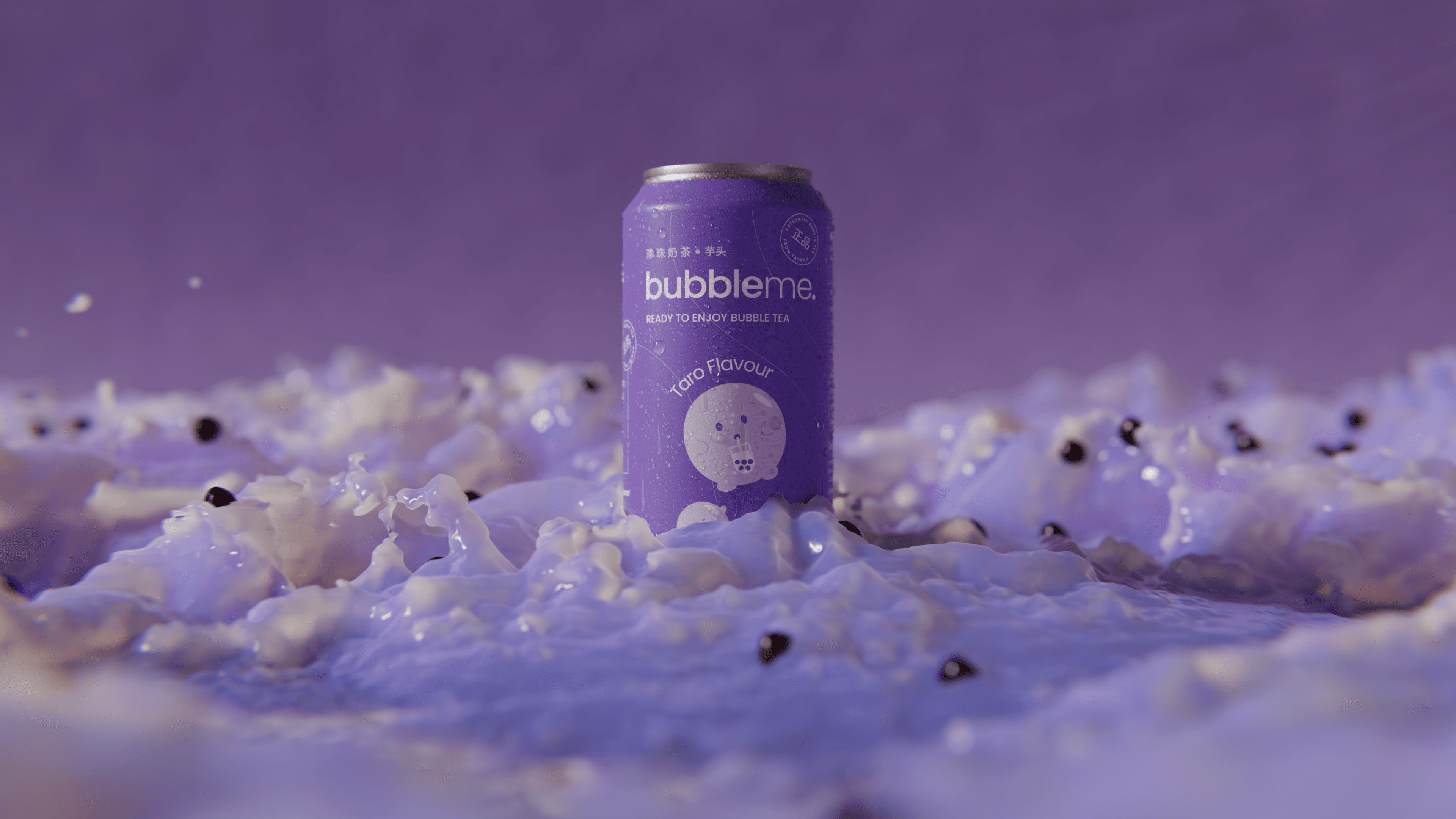
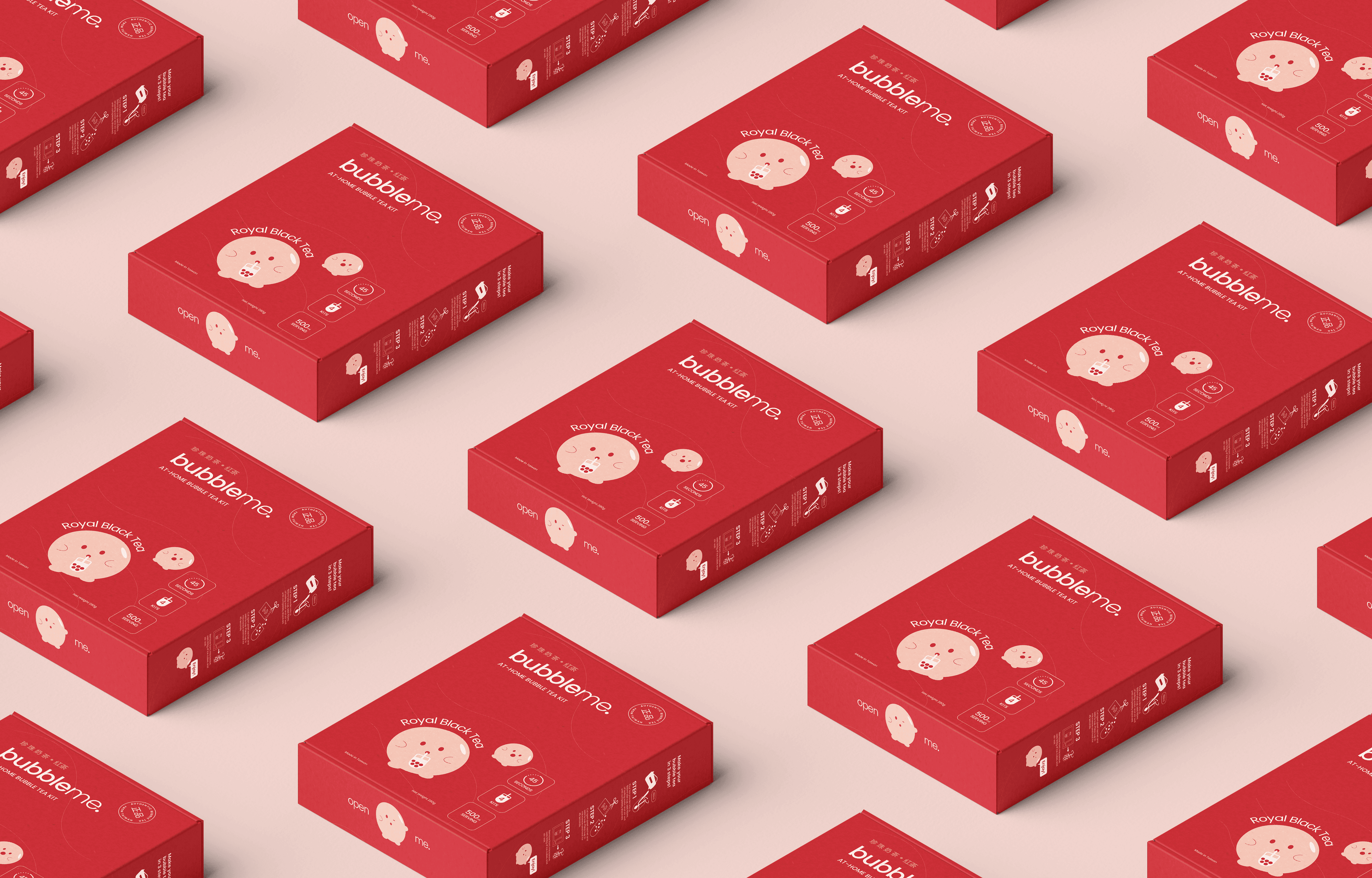
In partnering with BubbleMe we were able to bring the authentic taste of Taiwanese bubble tea to homes across Australia by delivering a flexible and memorable branding. We designed eye-catching packaging for their at-home bubble tea kit and ready-to-drink cans in a variety of flavours. We provided extensive print management support, supplier liaison, and a comprehensive guide for BubbleMe to build their own creative team around.
The result was a successful rollout across all of Australia, with our unique shelf-ready packaging designs, and a fun product experience for everyone to try at home.

The Opportunity
BubbleMe is the bubble tea you make on a weeknight when you can’t be bothered going to Gong Cha and you also can’t bring yourself to drink the watered-down supermarket version. The product came out of ByAsia Food’s Taiwanese manufacturer at roughly twice the flavour density of the only meaningful at-home incumbent, and the brand had to live up to that.
ByAsia Food had spent a decade as a distributor. Their business was importing established Asian grocery brands, mostly Korean, then increasingly across the wider Asian category, and moving them through Australian supermarkets at a national scale. The team had spent years inside the category buyer relationships at Woolworths and Coles, knew what moved off shelves and what didn’t, and could see Australian taste opening up to the broader Asian food category at a faster rate than the local FMCG world was responding to. BubbleMe was the first product they’d build under their own name rather than someone else’s.
The product itself already had substance behind it: Taiwanese tea sourced from mountain regions known for serious tea culture, stronger flavour density than existing at-home competitors, and confirmed placement across more than 1000 Woolworths stores. What ByAsia lacked wasn’t the product — it was a brand capable of carrying that product into mainstream retail. At the time, most at-home bubble tea brands either diluted their Asian identity into generic supermarket beverages or leaned too heavily into novelty aesthetics. BubbleMe’s opportunity was to sit between those worlds — bringing the flavour cues, visual familiarity and cultural experience people already associated with Gong Cha and Chatime onto a Woolworths shelf without losing the cultural credibility behind it.
The Opportunity
BubbleMe is the bubble tea you make on a weeknight when you can’t be bothered going to Gong Cha and you also can’t bring yourself to drink the watered-down supermarket version. The product came out of ByAsia Food’s Taiwanese manufacturer at roughly twice the flavour density of the only meaningful at-home incumbent, and the brand had to live up to that.
ByAsia Food had spent a decade as a distributor. Their business was importing established Asian grocery brands, mostly Korean, then increasingly across the wider Asian category, and moving them through Australian supermarkets at a national scale. The team had spent years inside the category buyer relationships at Woolworths and Coles, knew what moved off shelves and what didn’t, and could see Australian taste opening up to the broader Asian food category at a faster rate than the local FMCG world was responding to. BubbleMe was the first product they’d build under their own name rather than someone else’s.
The product itself already had substance behind it: Taiwanese tea sourced from mountain regions known for serious tea culture, stronger flavour density than existing at-home competitors, and confirmed placement across more than 1000 Woolworths stores. What ByAsia lacked wasn’t the product — it was a brand capable of carrying that product into mainstream retail. At the time, most at-home bubble tea brands either diluted their Asian identity into generic supermarket beverages or leaned too heavily into novelty aesthetics. BubbleMe’s opportunity was to sit between those worlds — bringing the flavour cues, visual familiarity and cultural experience people already associated with Gong Cha and Chatime onto a Woolworths shelf without losing the cultural credibility behind it.
The brand direction kept circling the same cultural tension: where Taiwanese tea culture meets young modern lifestyle. Where the structure of a traditional tea house meets the softness, colour and accessibility of contemporary FMCG branding. That thinking shaped the identity system from the beginning. The original brief had asked for an animal mascot — specifically a hamster — to make the brand feel more “fun”. But a hamster has no relationship to bubble tea. A boba does.
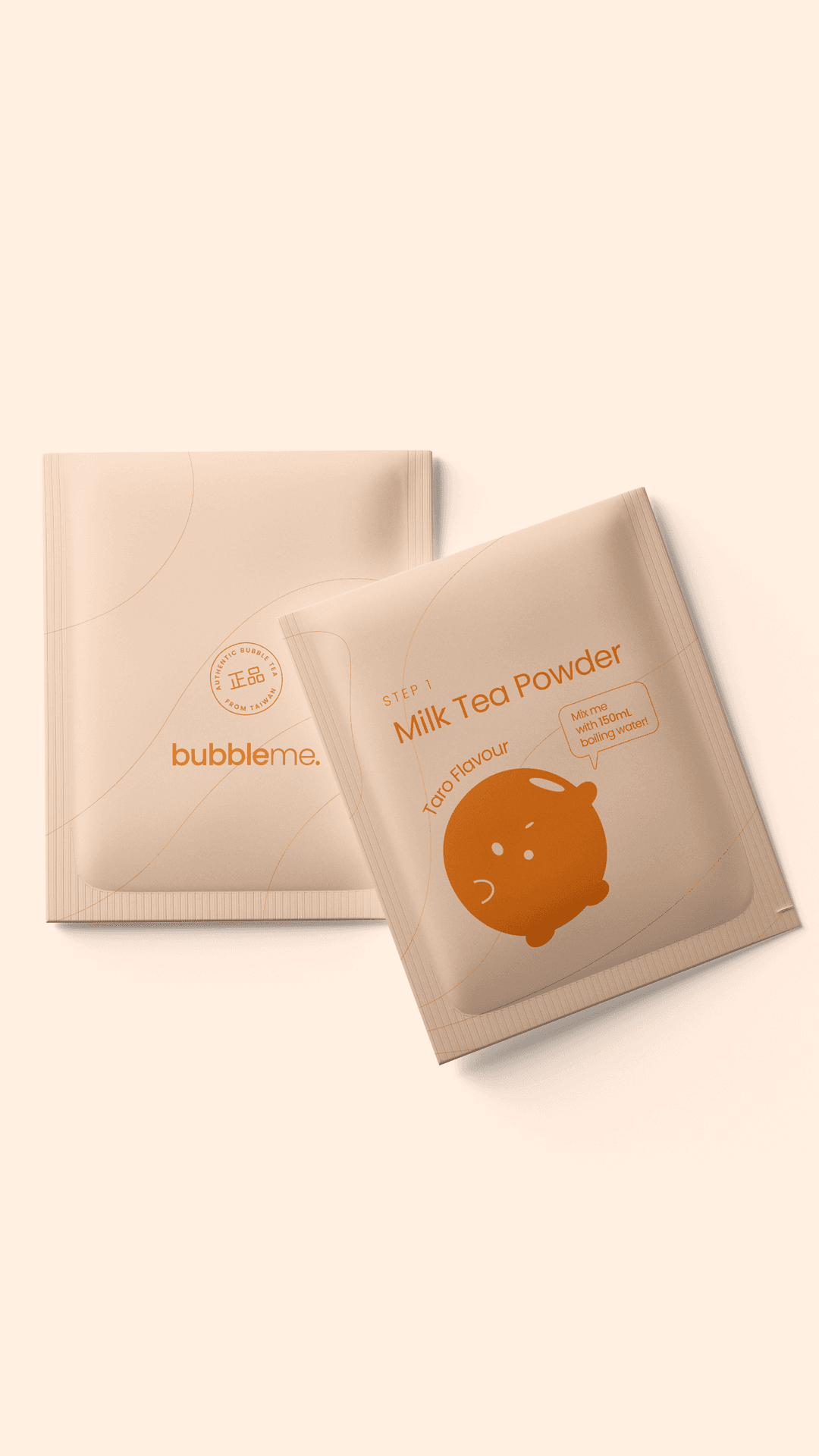
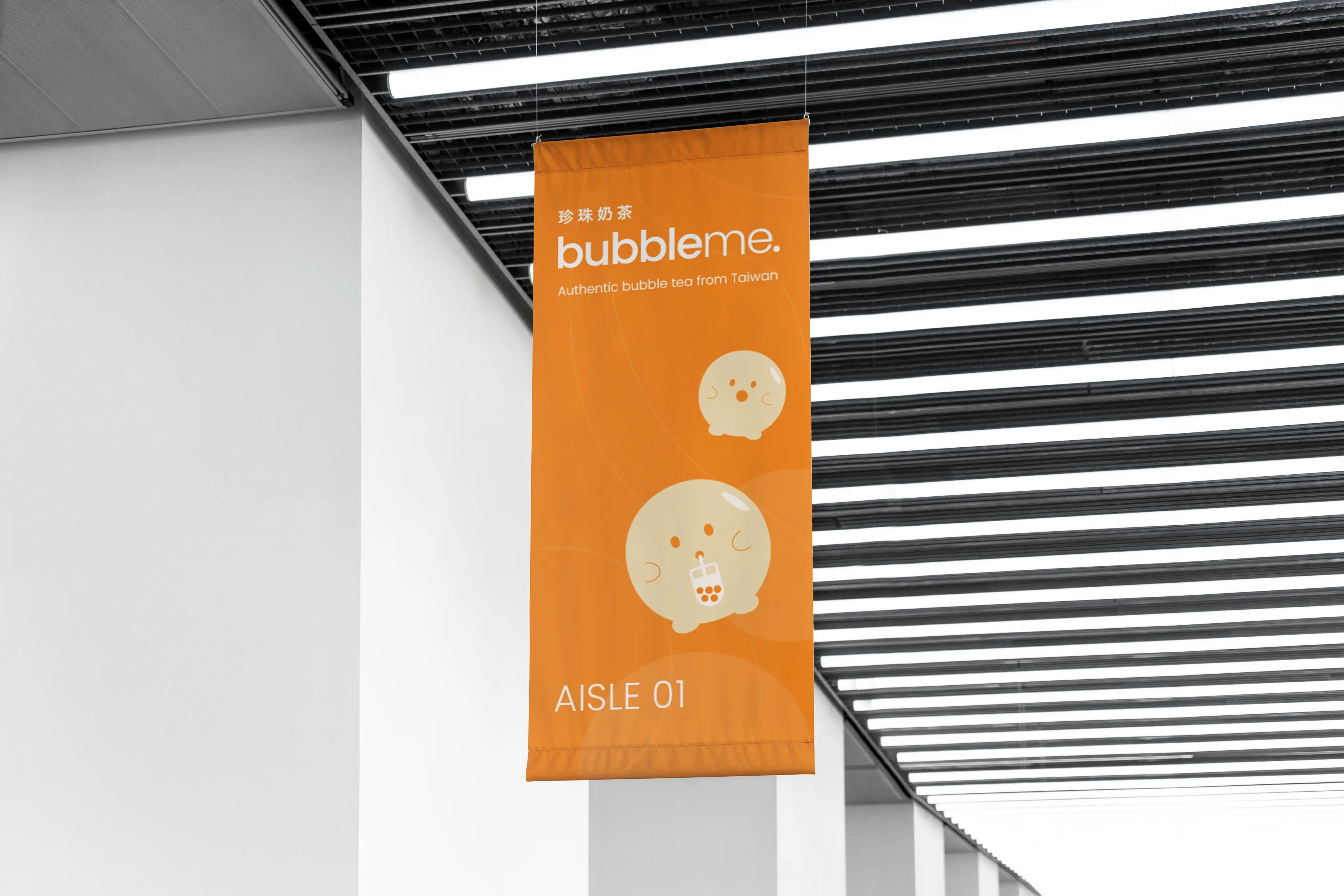
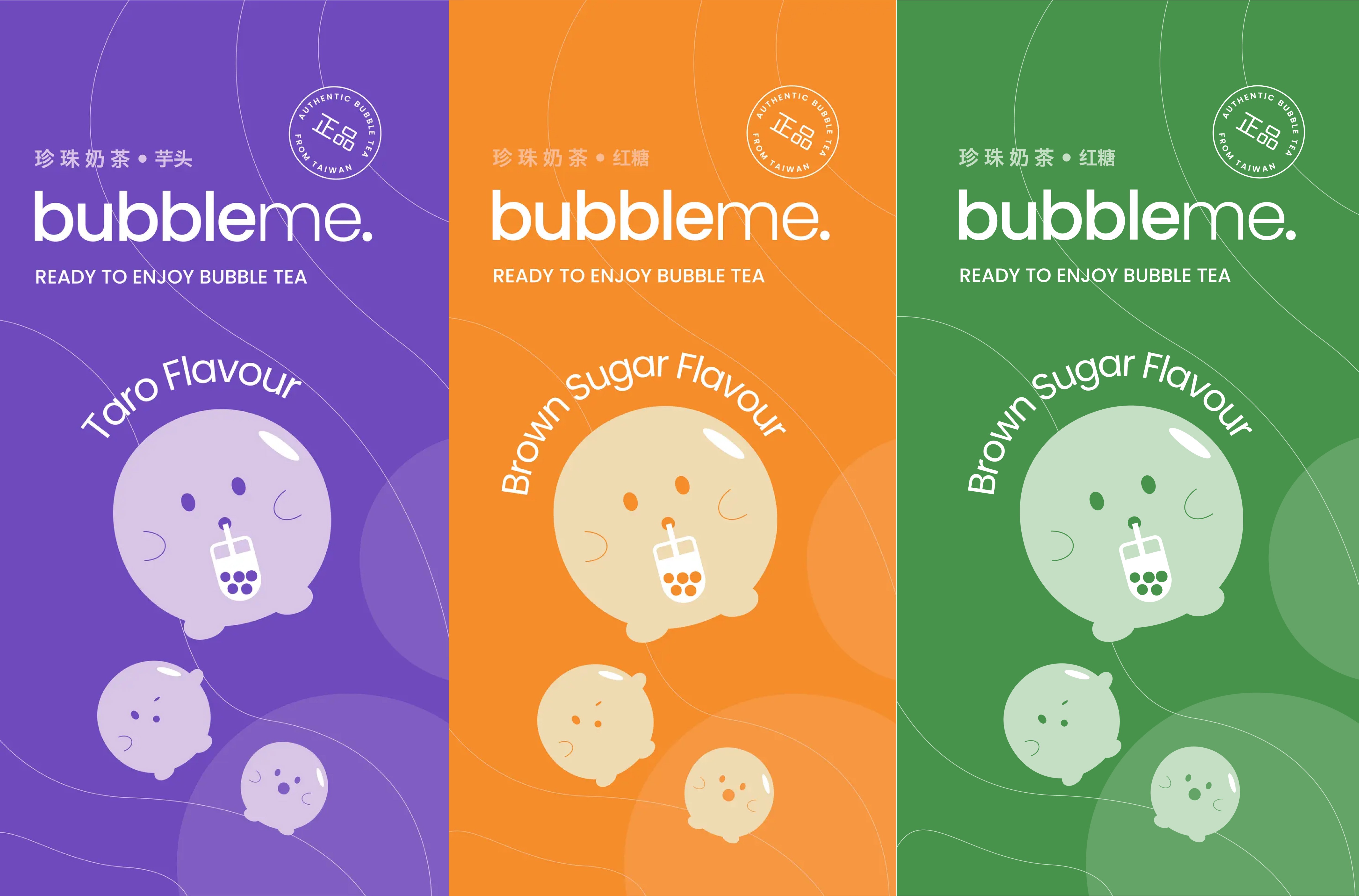
The final mascot became a tapioca pearl character pulled directly from the product itself. It gave the brand warmth and recall in a category dominated by stock product photography while lowering the barrier for shoppers making bubble tea at home for the first time. Something recognisable. Something approachable. Pulled from the product rather than bolted on as decoration.
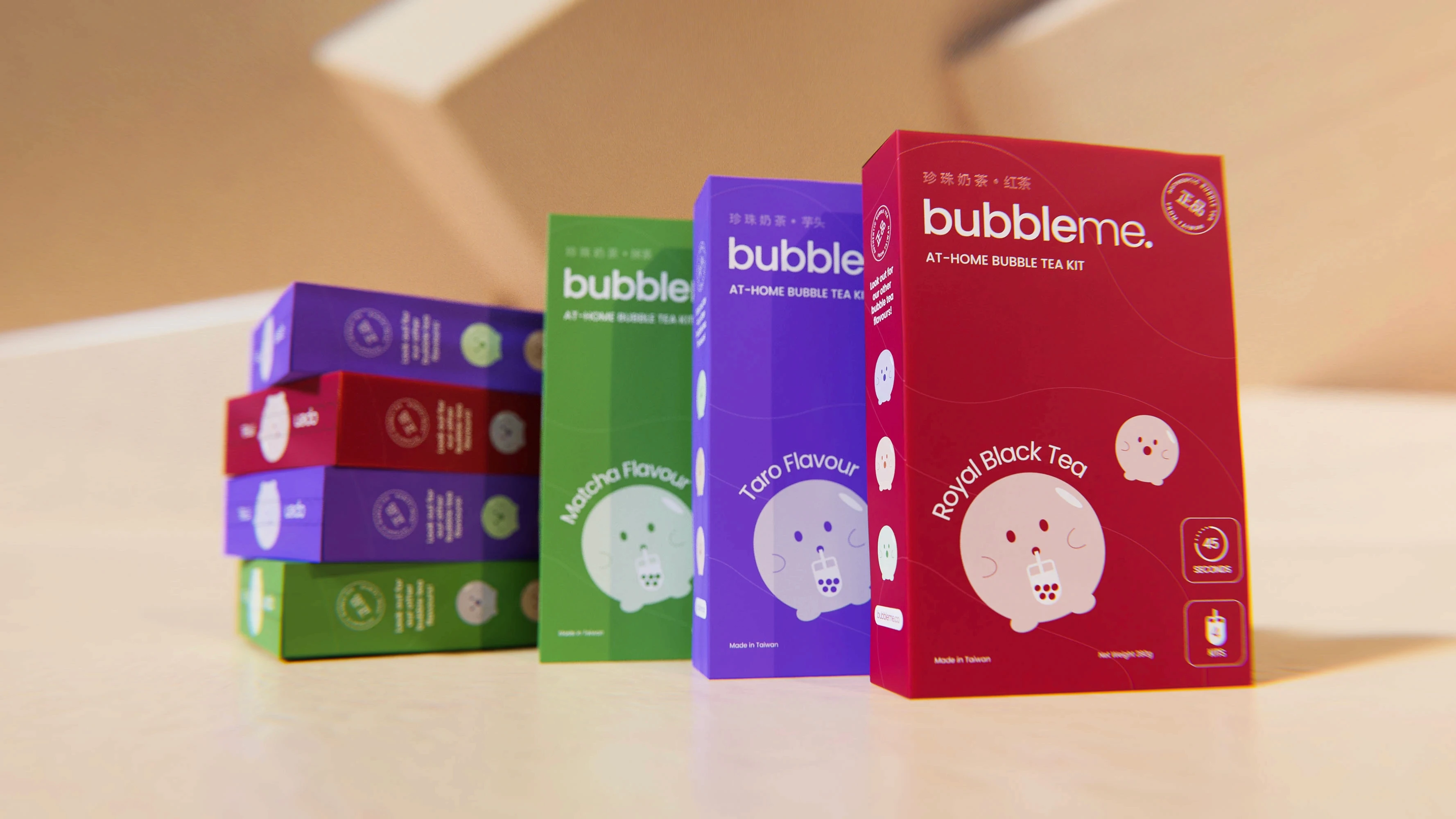
The colour system borrowed directly from the logic of franchise menus. Matcha green. Taro purple. Brown sugar orange. Black tea red. The kind of fast flavour recognition people already understood from Gong Cha and Chatime before they even read the label. The illustration style and typography system stayed intentionally clean and restrained, avoiding both the overly childish cartoon language common in novelty Asian drinks and the overly neutral “generic beverage” look dominating supermarket FMCG.
BubbleMe launched into 1000+ Woolworths stores with seven packaging designs across the at-home kit and ready-to-drink can range. The work was shortlisted at the 2023 Pentawards. Beyond the shelf, the project gave ByAsia Food its first owned consumer brand after a decade of putting someone else’s name on a product, and laid the foundation for the company’s broader move from importer-distributor into category builder.
The Opportunity
BubbleMe is the bubble tea you make on a weeknight when you can’t be bothered going to Gong Cha and you also can’t bring yourself to drink the watered-down supermarket version. The product came out of ByAsia Food’s Taiwanese manufacturer at roughly twice the flavour density of the only meaningful at-home incumbent, and the brand had to live up to that.
ByAsia Food had spent a decade as a distributor. Their business was importing established Asian grocery brands, mostly Korean, then increasingly across the wider Asian category, and moving them through Australian supermarkets at a national scale. The team had spent years inside the category buyer relationships at Woolworths and Coles, knew what moved off shelves and what didn’t, and could see Australian taste opening up to the broader Asian food category at a faster rate than the local FMCG world was responding to. BubbleMe was the first product they’d build under their own name rather than someone else’s.
The product itself already had substance behind it: Taiwanese tea sourced from mountain regions known for serious tea culture, stronger flavour density than existing at-home competitors, and confirmed placement across more than 1000 Woolworths stores. What ByAsia lacked wasn’t the product — it was a brand capable of carrying that product into mainstream retail. At the time, most at-home bubble tea brands either diluted their Asian identity into generic supermarket beverages or leaned too heavily into novelty aesthetics. BubbleMe’s opportunity was to sit between those worlds — bringing the flavour cues, visual familiarity and cultural experience people already associated with Gong Cha and Chatime onto a Woolworths shelf without losing the cultural credibility behind it.

The brand direction kept circling the same cultural tension: where Taiwanese tea culture meets young modern lifestyle. Where the structure of a traditional tea house meets the softness, colour and accessibility of contemporary FMCG branding. That thinking shaped the identity system from the beginning. The original brief had asked for an animal mascot — specifically a hamster — to make the brand feel more “fun”. But a hamster has no relationship to bubble tea. A boba does.
The final mascot became a tapioca pearl character pulled directly from the product itself. It gave the brand warmth and recall in a category dominated by stock product photography while lowering the barrier for shoppers making bubble tea at home for the first time. Something recognisable. Something approachable. Pulled from the product rather than bolted on as decoration.
The colour system borrowed directly from the logic of franchise menus. Matcha green. Taro purple. Brown sugar orange. Black tea red. The kind of fast flavour recognition people already understood from Gong Cha and Chatime before they even read the label. The illustration style and typography system stayed intentionally clean and restrained, avoiding both the overly childish cartoon language common in novelty Asian drinks and the overly neutral “generic beverage” look dominating supermarket FMCG.
BubbleMe launched into 1000+ Woolworths stores with seven packaging designs across the at-home kit and ready-to-drink can range. The work was shortlisted at the 2023 Pentawards. Beyond the shelf, the project gave ByAsia Food its first owned consumer brand after a decade of putting someone else’s name on a product, and laid the foundation for the company’s broader move from importer-distributor into category builder.

More works
More works